

Casserole Core
On Showing Up with Melted Cheese Like You Give a Damn

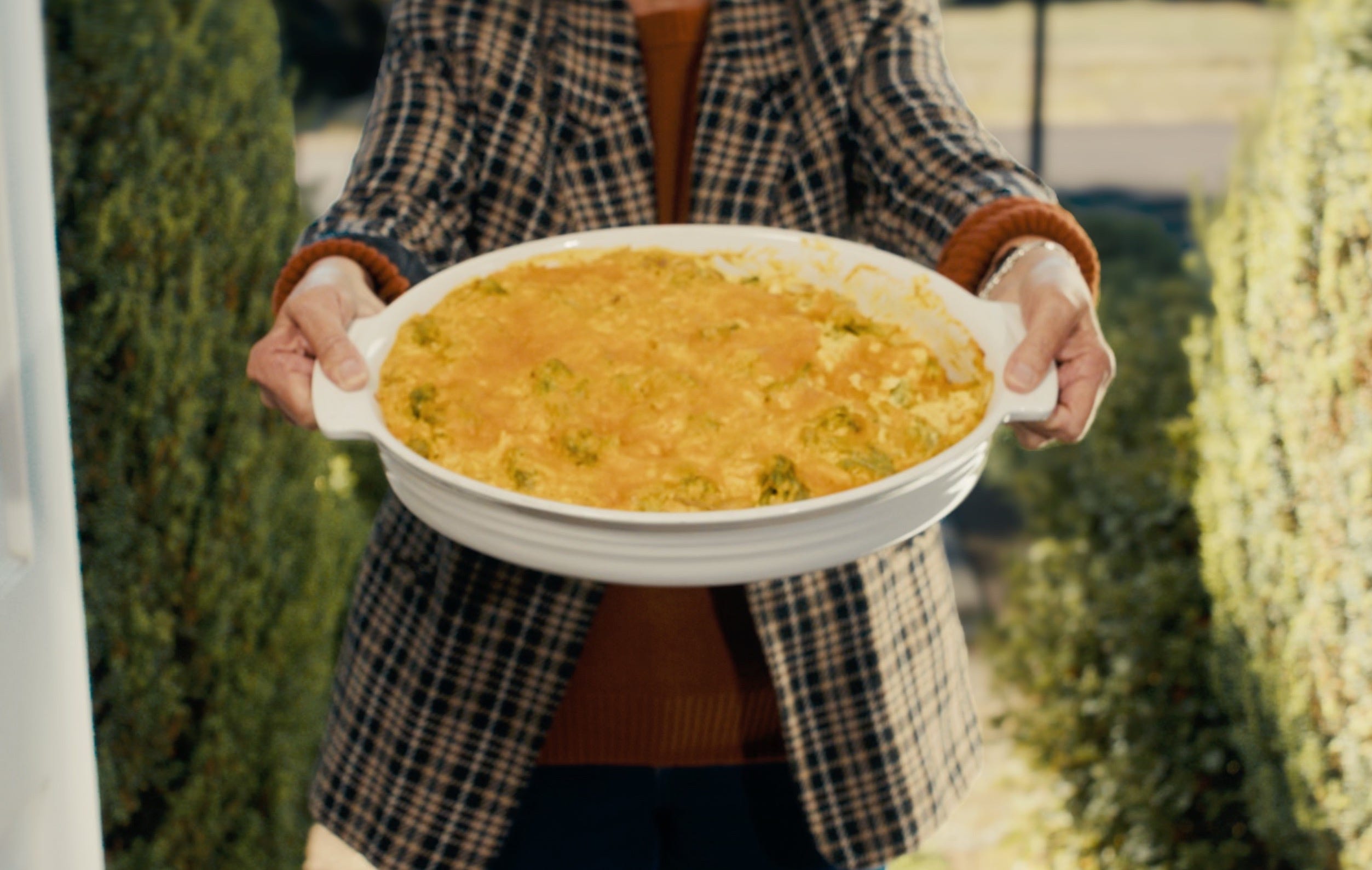
It’s 2019. My sister has just invited me over for a perfectly fork-tender pot roast.
It’s dinner time. Again.
Since my husband’s death, most food tastes like sand dissolving in my mouth. My two boys, one preschool-age and one a toddler, have been surviving on a steady diet of Z-bars. Cooking feels like climbing Mount Everest.
The layout of my 100-year-old bungalow has my kitchen sitting directly opposite my bedroom. This means that when I awake each morning to Rory, my eighteen-month-old, doing somersaults on my head, I’m quickly reminded of this mountain I have yet to climb.
“What would it take for me to recipe plan again?” I imagine myself writing up a grocery list, loading the kids into the car, pulling out pots (what even are those?!), throwing vegetables in (and those?!), and setting the table for three. I imagine the boys and I doing the dishes together and dancing to music like some cute sitcom episode.
I feel like I might throw up.
But before I have to be “so strong,” like everyone’s Instagram compliments seem to require of me, and throw a meal together, my sister has already texted me and invited me for dinner. It’s not difficult to reply “yes,” as she lives only five houses down and is also a food blogger with an inability to burn, over-salt, undercook, or phone it in.
Since the beginning of time, people like her have been feeding grievers as a gesture of support and love. The casserole especially, with all its cheesy wonder and goodness, has been the one-pot wonder of choice for those standing on the sidelines, desperate to help their hurting friends.
My sister Natalie is Casserole Core personified.

“What should I say to my grieving friend? What did you find helpful?”
This is the most common question I’ve been asked since I began sharing about grief on the internet. It is a valid one. Words can be intimidating when face-to-face with a fresh griever who seems as tender as Natalie’s pot roast. But it wasn’t really the positive words, the holy affirmations, or the scriptures shared that had the greatest impact on my year-one survival.
It was the casseroles.
And the pot roasts and the hundreds of texts inviting me to dinner. It was putting two boys to bed, well-fed and with no dishes in sight. It was vegetables in their tummies, even if those vegetables were soaked in bright orange, stringy cheese. It was the ones who showed up.
My friend Pam McConnell was also widowed too soon and is the first I think of when it comes to the art of showing up. I asked Pam for her thoughts on what I’m deeming “Casserole Core.” I wanted to know what “support” looked like for her in the early days of her loss. Unlike me, she didn’t have a sister down the street or a community flooding her porch with hot dishes.
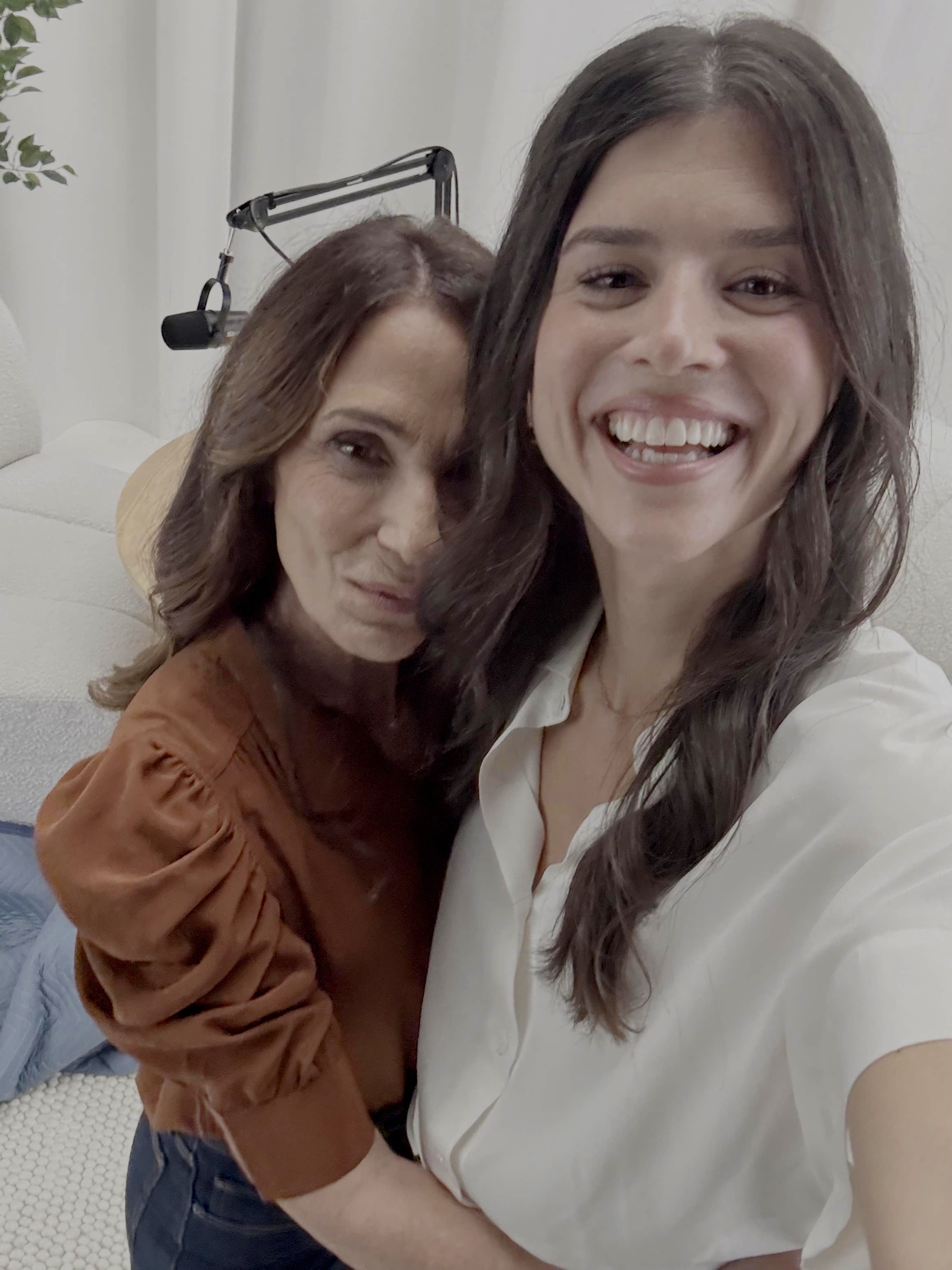
Pam gets asked the “What should I say to my grieving friend?” question all the time. She’s not sure of the answer either. But what not to say? That she’s well-versed in. Pam loves to share the one phrase not to say—a phrase she is actually launching a whole podcast about. Here’s our interview:
L: How did people show up for you in the weeks, months, and years after your husband passed?
P: “Show up?”
For the most part, they didn’t—and not because they didn’t care. They simply didn’t know what to do.
What I heard over and over was the most common—and honestly, most unhelpful—phrase people offer in moments of crisis: “If there’s anything I can do, just let me know.”
And here’s the problem with that: when you’re in deep grief or crisis, you don’t know what you need. You are flooded with pain, shock, overwhelm, and despair. Your brain is in a fog. You can’t sort through your own emotions, let alone generate a clear list of requests for someone else.
So I would nod and say, “Okay, I will,” meaning I’ll call you when I somehow figure out what I need.
But the truth is—that moment rarely comes. Not because help isn’t needed, but because grief makes asking nearly impossible.
I often imagine what it would be like to live in a world where people came to our rescue during acute trauma without requiring us to ask. Where help arrived not because someone made a request, but because others paid attention.
We are capable of putting ourselves in another person’s shoes—we really are. But too often, we don’t. Instead, we unintentionally place the responsibility on the person who is least equipped to carry it: the one in crisis.
But what if we paused and truly imagined what they might be going through? What if we let empathy do the work before words were required—and simply started meeting some of those needs? Asking the wounded to direct their own rescue is too much to ask. Waiting for instructions is not the same as showing up.
L: What do you wish your community had done a little better in supporting you? What did they do well?
P: I wish my community had slowed down long enough to truly observe what was happening. There were many needs—some obvious and others much harder to see. I appeared strong and capable, but if someone had taken the time to imagine the impact of what had just occurred, it would have been clear that I was deeply overwhelmed and disoriented.
What could have been done better was taking the initiative. Much of the responsibility to articulate my needs was placed on me, and in acute grief, that simply isn’t possible. When someone is in crisis, asking them to direct their own support is often too much to ask.
That said, there is one person whose presence stands out as a model of what support can look like.
His name is Howard. We worked together at Nike for many years, and my husband also worked there and knew him well. On the morning my husband passed away, I called Howard to let him know. After the body was taken away, I found myself sitting alone in my living room, stunned and unable to process the finality of what had just happened.
Earlier, my best friend had asked if she should come over, and I said no—not because I didn’t need her, but because I was numb and unable to identify what I needed in that moment. I don’t fault her for that; she asked, and I declined.
A short time later, there was a knock at the door. It was Howard and another friend of my husband’s. I remember asking, “Howard, what are you doing here?” And he simply said, “I just thought you might not want to be alone.” I had no idea just how much I needed to “not” be alone.
Howard sat with me for hours. He didn’t ask questions or try to fix anything. He didn’t fill the silence. He allowed me the space to process, speaking only when I invited it.
It was one of the most healing experiences I can remember from that season of loss. He didn’t wait for instructions or explanations. He imagined what I might need—and he showed up.
When my community showed up best, it looked like that: quiet presence, thoughtful initiative, and care offered without being asked. That kind of support didn’t just help me endure my grief—it helped me heal.
L: Was there a particular “show up” dish you remember from the beginning of your grief journey? Any casseroles we should know about?
P: Chicken pot pie. One hundred percent.
It’s casserole-adjacent, which feels close enough for grief math—and essentially a casserole with better PR, so I think it qualifies. I still make it, and somehow one bite transports me straight back to the beginning of my grief journey. Turns out, memories come with a crust.
L: Why did you decide to start a podcast on this topic?
P: Truthfully, I never dreamed of starting a podcast. It never even crossed my mind.
A few years ago, I was asked to speak at a women’s conference, and my topic was the very phrase that had followed me through grief: “If there’s anything I can do, just let me know.” The audience that day was made up of 350 widows—some newly widowed, some remarried, and some who had been living with loss for many years.
At one point, I asked a simple question: “Have any of you ever heard this phrase?”
The response was immediate and visceral. There was a collective gasp—followed by an audible sigh. It was one of those moments where you could feel shared recognition ripple through the room.
Right after I stepped off the stage, woman after woman approached me, each telling her own story. Again and again, I heard the same theme: in their grief, people had placed the burden on them to figure out what they needed—to explain it, to ask for it, to manage it—at a time when they were least capable of doing so.
Among those conversations, one woman stood out. She, too, was a widow, and she told me this was the greatest struggle she faced with family and friends after her loss. She wondered out loud what it might look like to change that—not just for widows, but for everyone—and asked if I had ever considered turning the idea into a podcast.
I hadn’t.
What began as a single talk became an invitation—to name a shared experience, to challenge a well-intentioned but ineffective way we show up for one another, and to imagine something better. I said yes because I wanted to be part of changing that story—and because I knew I wasn’t alone in the longing.
The podcast exists to help us move from good intentions to meaningful action—to learn how to show up for one another without waiting to be asked.
L: What advice would you give to someone trying to support their friend who is currently in a life crisis?
P: The invitation is simple, but it requires courage: try to imagine what someone in crisis might actually need.
Ask yourself, What if this were happening to me?
Pause long enough to consider what they might be experiencing beneath the surface—the shock, the exhaustion, the isolation. Then act on that imagination. Even if you get it wrong.
The truth is, it’s unlikely you will.
Listen carefully to what they are saying—and just as importantly, what they are not saying. The needs are often there if we’re willing to pay attention.
I have a dear friend who recently lost her mother. She made it very clear that she didn’t want to talk about it, so I honored that. Instead, I sent her a beautiful bouquet of flowers with a simple note: I’m thinking of you. She loved it. And then I sent flowers again a little while later—because when everyone else has returned to their normal lives, the person in grief is still living it as if it happened fifteen minutes ago. I wanted her to know, I see you. I know it still hurts.
Sometimes the greatest gift isn’t doing something—it’s being there.
Don’t worry so much about getting it right. Worry about not disappearing. Imagine what they might need and show up with humility and presence.
Because silence and absence, not imperfection, hurt the most.
To Pam and me, Casserole Core is more than a steamy shepherd’s pie left on a doorstep at 5 pm sharp (though that is always an excellent choice). It’s as simple as a text dinner invite or a knock at the door.
Pam’s podcast, “If There Is Anything I Can Do, Just Let Me Know,” will be released this spring on AccessMore (K-LOVE’s podcast platform). If you’re unsure how to show up for others, it’s a great place to start. Oh, and you’ll find this casserole loving girl in one of her first episodes!

“Asking the wounded to direct their own rescue is too much to ask.”
This!! (And everything else - I’m amazed, every time, at your gift of being able to put grief into words) thanks so much to you and Pam for sharing.
I've really enjoyed getting your Substack for the past year ever since Rachael introduced us briefly last year at HS Conf. :) This reminded me so much of this article I read this week - https://www.frontporchrepublic.com/2024/07/the-consolation-of-silence/ - I think you'll enjoy it.